

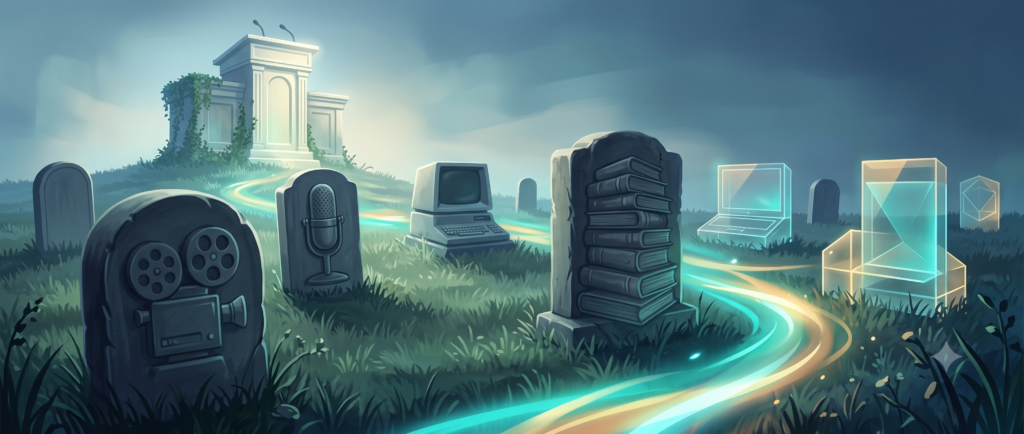
Every generation of educational reformers seems to make the exact same prediction: the lecture is about to die. For more than a century, critics have argued that the traditional lecture hall is a relic of an era when information was scarce and professors were the ultimate gatekeepers. First, it was motion pictures in the early 1900s; then came radio, television, personal computers, MOOCs, and now, generative AI. Yet, if you walk into almost any university today, the lecture is still very much alive. Why does this format survive every single wave of disruptive technology?
A truly great lecture has never been just about delivering information. If learning were simply a matter of consuming data, students could just read the textbook and call it a day. Instead, the magic of a lecture lies in its power to act as conceptual scaffolding. A skilled instructor doesn’t just recite facts; they organize complex knowledge, highlight what matters, and demonstrate in real time how an expert thinks within a discipline. They show students how to map an intellectual landscape.
However, the way lectures function is shifting. Rather than serving as a one-size-fits-all broadcast, the modern lecture is evolving into a more focused guide that works together with active learning. This is where specialized digital learning platforms like Möbius by DigitalEd fit into the ecosystem. Built specifically for complex STEM disciplines, Möbius allows educators to introduce a core concept during a lecture, and then seamlessly transition students into hands-on, high-fidelity practice. By offering algorithmic problem sets and real-time feedback, it guides students through active, self-paced mastery, freeing instructors to focus on what they do best: guiding students through the most challenging parts of their intellectual journey.
Are you ready to stop fighting the lecture and start evolving it? To hear the full exploration of why this educational format continues to outlast every “disruptive” tech wave, listen to this episode of The EdTech Curio Cabinet today on YouTube, Apple Podcasts, or Spotify.