

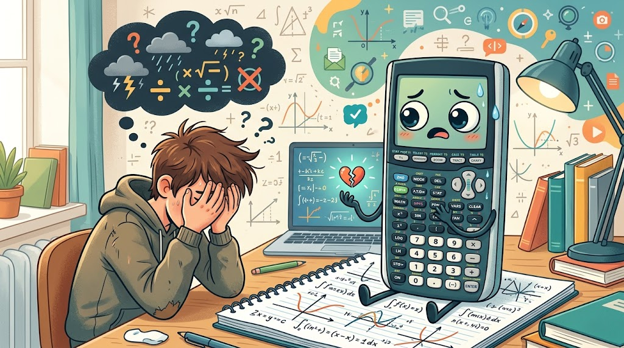
For decades, educators hoped technology would solve one of learning’s most persistent hurdles: math anxiety. Modern tools like graphing calculators, computational math tools, and AI tutors have made math more visual, low-stakes, and accessible than ever before. Yet, despite these digital advances, math anxiety endures, affecting an estimated 25% of children and following millions of students well into adulthood and higher education.
Why hasn’t innovation erased this barrier? Because confidence in mathematics isn’t a technological problem, it’s a psychological one. Math anxiety often stems from early, vulnerable moments: a public mistake, a confusing unit, or a sudden fear of falling behind. Over time, these experiences solidify into identity, convincing students that they simply “aren’t a math person.” While digital tools provide practice and instant feedback, they cannot fully automate the human elements, encouragement, guidance, and empathy, that reframe how a student views their own intelligence.

The future of mathematics education depends not just on building better tools, but on cultivating better learning environments. Technology is at its best when it supports productive struggle, allowing students to experiment and learn from mistakes without judgment. To truly dismantle math anxiety, we must combine powerful tech with human-centered teaching that frames mathematics not as an inherent test of talent, but as a skill that grows over time.
Listen to the podcast: The Curio Cabinet
Take Action: Download the 5 Strategies for Fostering a Positive Learning Environment for Mathematics Cheat Sheet