

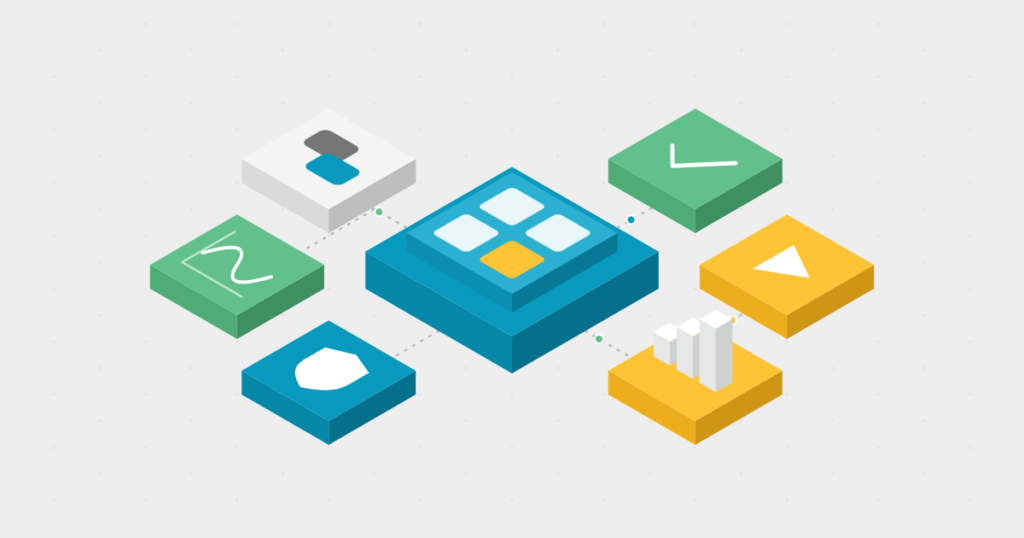
Ask someone to describe a modern university course and they’ll probably mention a tool: the learning platform, the courseware, the grading software, maybe an AI assistant. But look a little closer and almost no learning happens in just one of them. A typical course runs across a whole stack. There’s a learning management system (LMS) where the course lives, plus courseware for practice, video for lectures, discussion boards, assessment platforms and analytics dashboards. Each one is often built by a different company. Students see the simple version: log in, find the course, do the work. Behind the scenes, those systems are constantly passing data back and forth, checking who’s logged in, keeping course structures in sync, and protecting privacy. What looks like one single tool is really a network.
That’s where the paradox starts. Universities usually buy tools one at a time, but they expect them to work as one system. One instructor adopts a courseware tool, IT rolls out an LMS, another department brings in analytics. Each decision makes sense on its own, and each tool might be excellent on its own. But if they don’t talk to each other, students end up juggling extra logins, disconnected workflows, and duplicate information. Instructors end up managing the software when they should be teaching. A tool can be great and still not fit with the rest.
The fix isn’t a single mega-platform that does everything. It’s interoperability. Shared standards like LTI Advantage, from 1EdTech Consortium, let specialized tools plug into one another securely and consistently. Other industries already work this way. Smartphones depend on app stores, and banks connect to payment processors and digital wallets. More and more, a tool’s value in education depends on how well it fits into everything else, not just on what it does alone. That’s a technical problem, but it’s also a design problem and a strategic one for institutions.
At DigitalEd, we built Möbius with that in mind. It brings STEM courseware, algorithmic questions, and auto-grading into the LMS your institution already uses, so students and instructors get one connected experience. Want to see how Möbius fits your stack? Book a demo. And if you’d like to dig further into the ideas behind how learning technology connects, listen to Season 1, Episode 7 of The EdTech Curio Cabinet.