


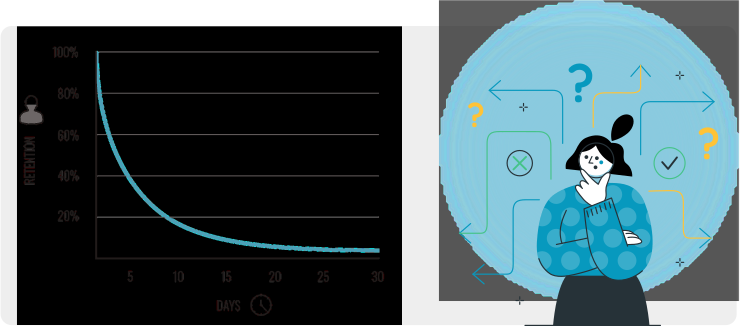
Why is it that a student may ace a test but ask them the same questions a week later and much of it has slipped away? This isn’t laziness or lack of intelligence—it’s simply how memory works. In the late 19th century, psychologist Hermann Ebbinghaus described this phenomenon as the Forgetting Curve. His research showed that within an hour of learning new information, people may forget up to 50% of it. Within 24 hours, this can rise to around 70%, and by the end of the week, learners often retain only about 25% of what they studied.
But here’s the good news: educators can address the curve with evidence-based strategies. And, when applied in classrooms these strategies can turn short-term learning into long-term mastery.
What is the Forgetting Curve?
The Forgetting Curve shows the exponential decline of memory retention over time if knowledge isn’t actively reinforced. Right after learning something new, students are most at risk of forgetting it. Without interventions like review, testing, or application, retention plummets.
Think of memory like a muscle: the less it’s exercised, the weaker it becomes. But with practice, it gets stronger and more resilient.
Why Beating the Forgetting Curve Matters
For students, forgetting means lost confidence, shaky foundations, and wasted effort. For faculty, it often results in reteaching the same material repeatedly instead of moving forward.
One study found that spaced repetition can improve long-term retention by up to 200% compared to massed practice or cramming . That’s a big win for both teaching efficiency and student outcomes.
How to Help Students Retain What They Learn
The Forgetting Curve might feel unavoidable, but there are effective ways to slow it down and even reverse it. By adopting proven teaching strategies, educators can help students strengthen memory, build mastery, and retain knowledge long after the initial lesson.
Here are 8 practical approaches to overcome the Forgetting Curve:
- Interrupt forgetting with regular retrieval
Frequent recall strengthens memory—think low-stakes quizzes or short-answer prompts.
- Interleave content and formats
Mix problem types and approaches. This boosts problem-solving skills and prevents rote learning.
- Space out practice and testing
Avoid cramming. Instead, spread reviews and assignments across time to build durable learning.
- Use dynamic testing
Identify knowledge gaps with adaptive assessments so students focus on what they don’t know.
- Provide instant feedback
Immediate responses help students correct errors and improve learning strategies.
- Encourage active learning
Games, group work, and hands-on activities make knowledge stick.
- Reflect and apply knowledge
Connecting content to real-world scenarios makes it more meaningful—and memorable.
- Anchor key concepts with visuals
Visual learning aids can cut learning time by up to 40% and significantly improve recall.
For a deeper dive, download our Forgetting Curve infographic and keep these strategies handy in your teaching toolkit.
Möbius: The Interactive Platform to Beat the Forgetting Curve
Online learning platforms like Möbius are designed to work seamlessly with your LMS while giving students what traditional approaches often lack: interactivity, unlimited practice, and instant feedback. By creating opportunities for active engagement, adaptive testing, and personalized learning paths, Möbius helps students:
- Build confidence in their skills
- Retain knowledge long after tests
- Focus on mastery instead of memorization
When students can practice as much as they need, with feedback that guides them every step of the way, the Forgetting Curve loses its power.
Final Thoughts
Students forget because that’s how the human brain works—but forgetting doesn’t have to derail learning. With the right strategies and tools, educators can help their students retain more, apply their knowledge with confidence, and achieve mastery.
Möbius brings those strategies to life by combining adaptive assessments, unlimited practice, and interactive content designed to make knowledge stick.
If you’re interested in additional ways to increase motivation and engagement in digital STEM learning, explore how gamification can support deeper participation and long-term retention.